


Do car roof top tents affect gas mileage? This is a question that many outdoor enthusiasts and potential buyers of car roof top tents often ask. As a supplier of high - quality car roof top tents, I'm here to provide you with a comprehensive analysis of how these tents can impact your vehicle's fuel efficiency.
Aerodynamics and Fuel Consumption
One of the primary factors contributing to changes in gas mileage when using a car roof top tent is aerodynamics. A vehicle's drag coefficient is a measure of how easily it moves through the air. When you install a roof top tent on your car, you are essentially adding a large, bulky object to the top of the vehicle. This creates additional air resistance, or drag, which the engine has to work harder to overcome.
According to studies in automotive engineering, an increase in drag can significantly reduce a vehicle's fuel efficiency. For example, a standard sedan without any roof - mounted accessories may have a relatively low drag coefficient, allowing it to cut through the air smoothly. However, when a large roof top tent is installed, the shape of the vehicle's upper profile is disrupted, causing the air to flow around the tent in a less efficient manner.
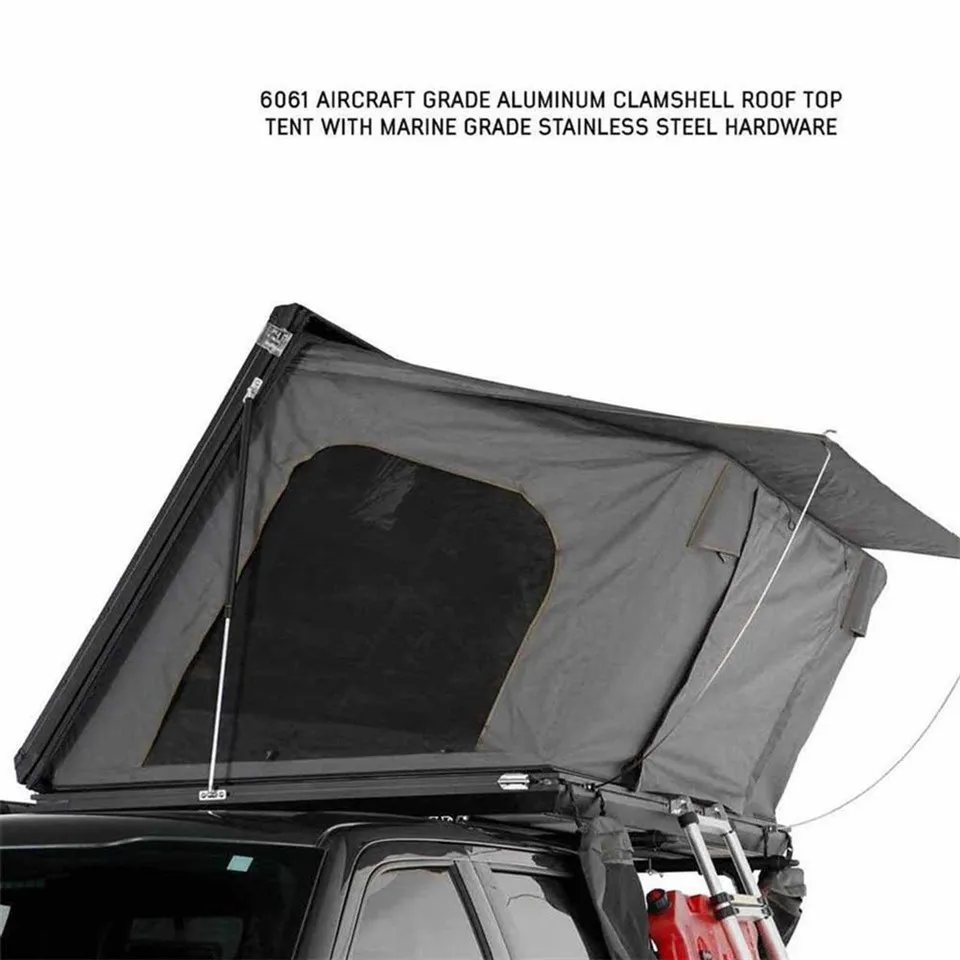
The amount by which gas mileage is affected depends on several factors. The size and shape of the tent play a crucial role. A larger tent with a boxy shape will generally create more drag than a smaller, more aerodynamically designed one. For instance, a Hard Shell Truck Tent may have a different impact on fuel efficiency compared to a Rooftop Hard Shell Tent for Cars. The former is typically designed for trucks, which already have a higher profile and may be less aerodynamic to begin with, while the latter is more tailored to the shape of a car, potentially causing less disruption to the airflow.
The speed at which you drive also affects the relationship between the roof top tent and gas mileage. At lower speeds, the impact of the added drag is less noticeable. As you increase your speed, the force of the air resistance grows exponentially. For example, if you're driving in a city at speeds around 30 - 40 miles per hour, the decrease in fuel efficiency may be only a few percentage points. However, on a highway at 60 - 70 miles per hour, the reduction in gas mileage can be much more significant, sometimes up to 10 - 20%.
Weight and Fuel Consumption
In addition to aerodynamics, the weight of the roof top tent also influences gas mileage. Every extra pound that your vehicle has to carry requires more energy to move. When you install a roof top tent, you're adding a considerable amount of weight on the top of your car.
The weight of roof top tents can vary widely depending on the type and materials used. Soft - shell tents are generally lighter than hard - shell ones. However, even a relatively lightweight soft - shell tent can add anywhere from 100 to 200 pounds to your vehicle, while hard - shell tents can weigh 200 to 400 pounds or more. This additional weight puts more stress on the engine, transmission, and brakes, and it directly affects the amount of fuel needed to power the vehicle.
The distribution of weight is also important. A roof top tent is installed at a high position on the vehicle, which raises the vehicle's center of gravity. This can lead to handling issues and may also require the engine to work harder to maintain stability and control, further reducing fuel efficiency.
Mitigating the Impact on Gas Mileage
While car roof top tents do tend to have a negative impact on gas mileage, there are several steps you can take to minimize this effect.
First, choose an aerodynamically designed tent. Many manufacturers, including ours, are now focusing on creating tents with sleek profiles and rounded edges to reduce drag. For example, our Roof Top Tent Side Entry is designed with aerodynamics in mind, which helps to minimize the disruption to the vehicle's airflow.
Second, remove the tent when it's not in use. If you're not going camping or off - roading for a while, taking the tent off your vehicle will restore its original aerodynamics and weight, thus improving fuel efficiency.
Third, adjust your driving habits. Try to maintain a steady speed, avoid sudden accelerations and decelerations, and use cruise control on the highway. These practices can help to reduce the additional strain on the engine caused by the tent.
Real - World Examples
To give you a better understanding of how car roof top tents affect gas mileage in real - world scenarios, let's look at some examples.
A car owner who drives a midsize SUV with a fuel efficiency of 25 miles per gallon (MPG) on the highway may notice a drop in efficiency after installing a roof top tent. If the tent has a significant impact on aerodynamics and adds a fair amount of weight, the highway MPG may drop to around 20 - 22 MPG. This means that for every 100 - mile trip, they'll be using approximately 1 - 1.5 more gallons of gas.
On the other hand, if they choose a more aerodynamic and lightweight tent and make some adjustments to their driving habits, the drop in MPG may be less severe, perhaps only down to 23 - 24 MPG.

Conclusion
In conclusion, car roof top tents do affect gas mileage. The added drag and weight caused by the tent force the engine to work harder, resulting in reduced fuel efficiency. However, the extent of the impact can vary depending on the tent's design, size, weight, and your driving habits.
As a supplier of car roof top tents, we understand the concerns of our customers about fuel efficiency. That's why we're committed to developing products that balance the need for a comfortable camping experience with minimizing the impact on gas mileage. Our range of Hard Shell Truck Tent, Rooftop Hard Shell Tent for Cars, and Roof Top Tent Side Entry are all designed with these considerations in mind.
If you're interested in purchasing a car roof top tent and want to learn more about how our products can meet your needs while minimizing the impact on your gas mileage, we encourage you to contact us for procurement discussions. We're here to provide you with detailed product information, answer your questions, and help you make the best decision for your outdoor adventures.
References
- SAE International. "Aerodynamics and Fuel Efficiency in Vehicles." Journal of Automotive Engineering.
- Consumer Reports. "The Impact of Roof - Mounted Accessories on Fuel Economy."


