


What is the strength - to - weight ratio of aluminium side steps?
As a supplier of Aluminium Side Step, I've witnessed firsthand the growing demand for these products in the automotive industry. Aluminium side steps have become a popular choice for vehicle owners due to their numerous advantages, one of the most significant being their excellent strength - to - weight ratio.
Understanding the Strength - to - Weight Ratio
The strength - to - weight ratio is a critical concept in materials science and engineering. It refers to the amount of strength a material has relative to its weight. A high strength - to - weight ratio means that the material can withstand a large amount of stress or load while being relatively light. This is particularly important in applications where weight reduction is crucial, such as in the automotive and aerospace industries.
In the case of aluminium side steps, a high strength - to - weight ratio translates into several benefits. Firstly, it makes the side steps easier to install. Since they are lighter, they can be handled more easily by a single person or a small team, reducing the time and effort required for installation. This is especially beneficial for aftermarket installations, where ease of installation is a key consideration for customers.

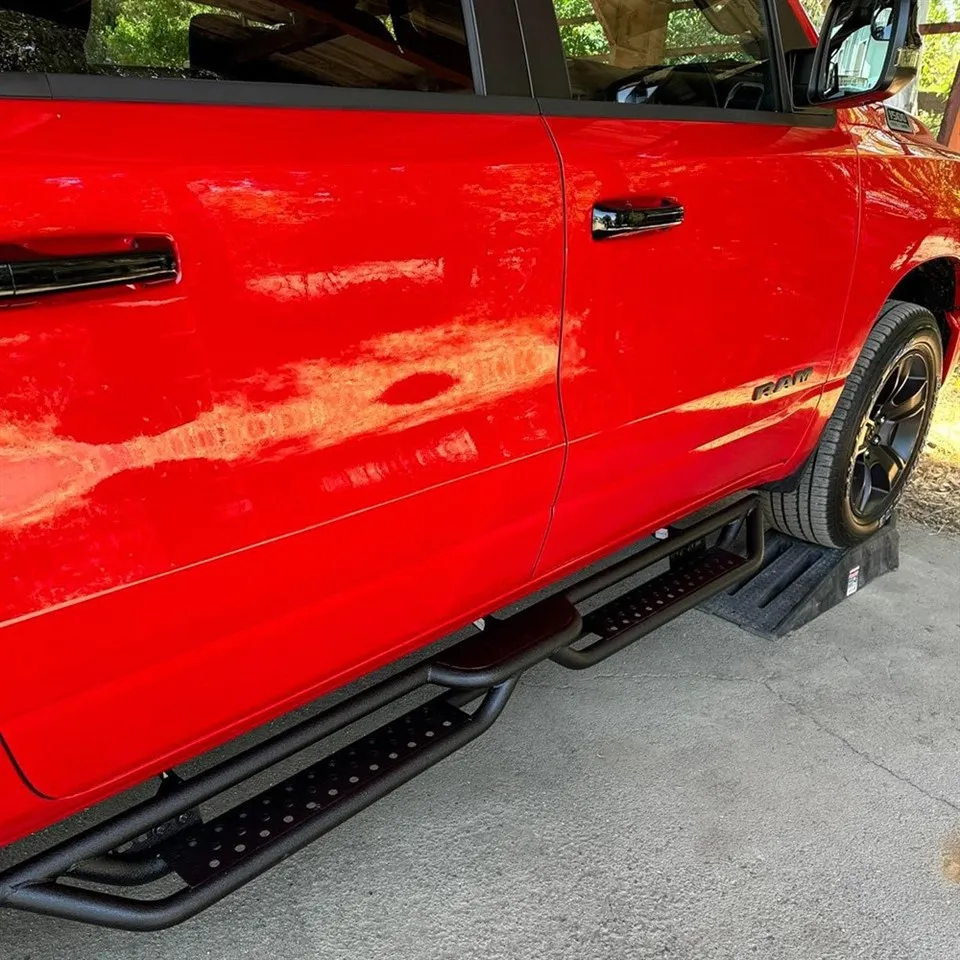
Secondly, a high strength - to - weight ratio contributes to improved fuel efficiency. In vehicles, every additional pound of weight requires more energy to move. By using aluminium side steps with a high strength - to - weight ratio, the overall weight of the vehicle is reduced, which in turn can lead to lower fuel consumption. This is not only cost - effective for the vehicle owner but also more environmentally friendly.
The Science Behind Aluminium's Strength - to - Weight Ratio
Aluminium is a remarkable metal with unique properties that give it an excellent strength - to - weight ratio. Chemically, aluminium has a relatively low density compared to other metals such as steel. Its density is approximately 2.7 g/cm³, which is about one - third that of steel. This low density means that for a given volume, aluminium weighs significantly less than steel.
However, aluminium is not just lightweight; it also has good strength. Aluminium can be alloyed with other elements such as copper, magnesium, silicon, and zinc to enhance its strength. These alloys can be tailored to meet specific requirements, allowing for the production of aluminium side steps with different levels of strength depending on the application.
For example, some aluminium side steps are made from 6061 - T6 alloy. This alloy is known for its high strength, good corrosion resistance, and excellent machinability. It has a yield strength of around 276 MPa and a tensile strength of about 310 MPa. Despite its high strength, it still maintains a relatively low weight, making it an ideal choice for side steps.
Comparing Aluminium Side Steps with Other Options
When considering side steps for vehicles, there are several options available in the market, including steel side steps and Pipe Running Board. Let's compare aluminium side steps with these alternatives in terms of strength - to - weight ratio.
Steel side steps are known for their durability and high strength. However, they are also much heavier than aluminium side steps. Steel has a density of approximately 7.85 g/cm³, which is almost three times that of aluminium. This means that for the same size and shape, a steel side step will weigh significantly more than an aluminium side step. While steel may have higher absolute strength in some cases, its lower strength - to - weight ratio makes it less suitable for applications where weight reduction is a priority.
Pipe Running Board is another option. These running boards are often made from steel or aluminium pipes. Aluminium pipe running boards offer the advantage of a high strength - to - weight ratio similar to aluminium side steps. However, the design and construction of pipe running boards may be different from traditional side steps, and they may not provide the same level of stability and support in all situations.
Applications of Aluminium Side Steps
Aluminium side steps are used in a wide range of vehicles, from passenger cars to commercial trucks. In passenger cars, they are mainly used for aesthetic purposes and to provide a convenient stepping platform for passengers. The high strength - to - weight ratio of aluminium side steps ensures that they can withstand the weight of passengers getting in and out of the vehicle without adding too much weight to the car.
For Side Step for Lifted Trucks, the strength - to - weight ratio is even more crucial. Lifted trucks are often used for off - road adventures and heavy - duty applications. The side steps need to be strong enough to withstand the rigors of rough terrain and the weight of the passengers. At the same time, they should not add excessive weight to the already heavy truck. Aluminium side steps are an ideal solution in this case, as they can provide the necessary strength while keeping the weight down.
Quality Control in Aluminium Side Step Production
As a supplier of Aluminium Side Step, we understand the importance of maintaining high quality to ensure the optimal strength - to - weight ratio. Our production process involves strict quality control measures at every stage.
We start by carefully selecting the aluminium alloys based on their properties and suitability for side step production. The raw materials are inspected to ensure that they meet our quality standards. During the manufacturing process, we use advanced techniques such as extrusion and machining to shape the aluminium into the desired side step design.
After production, each side step undergoes a series of tests. These tests include strength tests to ensure that the side step can withstand a certain amount of load, corrosion tests to check its resistance to rust and other forms of corrosion, and dimensional accuracy tests to ensure that it fits perfectly on the vehicle. Only after passing all these tests are the side steps approved for sale.
The Future of Aluminium Side Steps
The future of aluminium side steps looks promising. As the automotive industry continues to focus on weight reduction and fuel efficiency, the demand for high - strength, lightweight materials like aluminium will only increase.
Advancements in aluminium alloy technology are expected to further improve the strength - to - weight ratio of aluminium side steps. New alloys may be developed that offer even higher strength and better corrosion resistance while maintaining a low weight.
In addition, the design of aluminium side steps is also likely to evolve. Manufacturers may incorporate more advanced features such as anti - slip surfaces, integrated lighting, and aerodynamic designs to enhance the functionality and aesthetics of the side steps.
Contact for Purchase and Collaboration
If you are interested in our Aluminium Side Step products, we welcome you to contact us for more information and to discuss potential purchase and collaboration opportunities. Our team of experts is ready to assist you in finding the right side steps for your vehicles and answering any questions you may have.
References
- Callister, W. D., & Rethwisch, D. G. (2010). Materials Science and Engineering: An Introduction. Wiley.
- ASM Handbook Committee. (1990). ASM Handbook Volume 2: Properties and Selection: Nonferrous Alloys and Special - Purpose Materials. ASM International.


